Just a drive, just some rain, and killing Lori’s joy
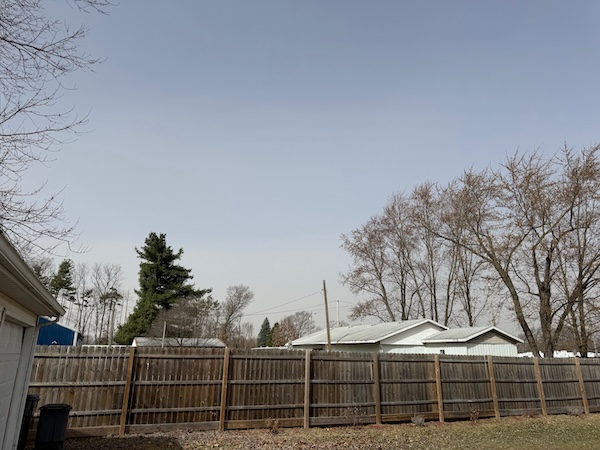
When we got back to Indiana, the weather turned gray.
That first Saturday, it was almost warm, the air soft and full of promise — and then came the rain. By Sunday, the sky had gone flat, the kind of overcast that makes time feel heavy. I’d just posted a reflection about weather and mood, about how sunlight helps me see the world more clearly. It turns out that’s easier to write from the desert, under a sky that opens every morning like a stage curtain.
Now I was back among clouds, the damp kind that dulls the edges of everything.
Lori didn’t seem to mind.
We were driving down County Road 35, the road she takes from Middlebury to Goshen, a familiar route lined with Amish farms and quiet fields. She was so happy to see green again — the barns, the fences, the small shapes of spring animals in motion. Each time she spotted one, she said hello:
“Hi, baby cows.”
“Hello, little lambs.”
And she meant it.
She really did.
But I wasn’t there for it.
I was sitting next to her, irritated, sullen, carrying a cloud big enough for two. Every “hi” made me flinch. At one point, I’m sure I wished the baby animals would just go away — which is not a sentence I’m proud of.
My mood began to spill. And before long, I could see it in her — the way her shoulders settled, the way her voice quieted. The joy I’d drained from the air was unmistakable. I’d changed the weather inside the car.
It’s humbling when you realize, in real time, that you’re the one changing the weather.
I’ve seen it happen before—at work, at home, even on long drives like this one. There’s a moment when my mind locks onto judgment: this day is bad, this sky is wrong, this feeling should not be here. And then the judgment spreads faster than the thing itself.
The truth is, the gray wasn’t the problem.
I was.
⸻
What makes it even more absurd is that I knew better.
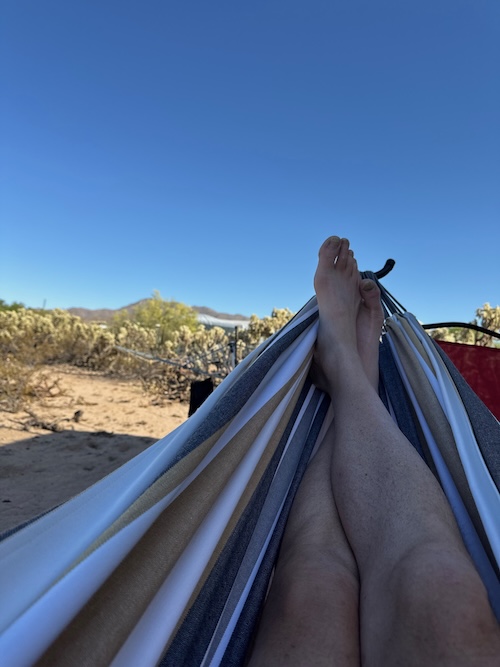
Back at Casa Saguaro, in the desert, I’d lived through one of those rare, golden stretches that people later call their halcyon days. Everything felt alive—the light, the work, the daily rhythm. I’d drive past Twin Peaks each morning, the mountains edged in sunrise, hot air balloons rising over the ridgeline like punctuation marks in a sentence the sky was still writing.
Even then, I told myself: Remember this.
I knew those moments wouldn’t last forever. They never do. But the awareness was its own kind of gratitude. Every day in that season, I could feel that I was awake to my own life.
And still, somewhere between that desert clarity and this gray Indiana sky, I forgot.
Maybe that’s what nostalgia really is—not longing for a place, but for the version of yourself who was fully present when you were there.
⸻
The older I get, the more I realize joy isn’t an event—it’s a practice.
It’s not something that happens to us; it’s something we allow.
I came across a line recently:
“Do you want to know what my secret is? I don’t mind what happens”
At first, it sounded flippant.
But the more I sit with it, the more I see its wisdom — a kind of spiritual detachment, not apathy.
It’s about loosening the mind’s grip on judgment.
Good day. Bad day.
Blue sky. Gray sky.
Nothing’s changed but the story we tell about it.
⸻
That thought came back to me at the pharmacy the other day. They couldn’t find Lori’s prescription. The old me would’ve sighed, stewed, stared at the ceiling tiles. Instead, I took a breath. The pharmacist was doing her job. I didn’t need to make it rain.
Presence, it turns out, is its own weather system.
⸻
Even now, as I write this, the sky outside is pale and undecided. Lori’s in the kitchen, humming, the morning moving gently around her. Somewhere down the road, a field of calves and lambs are being greeted.
This time, I can join her.
I can let the sun back in.