Out, back, again—learning to return with presence
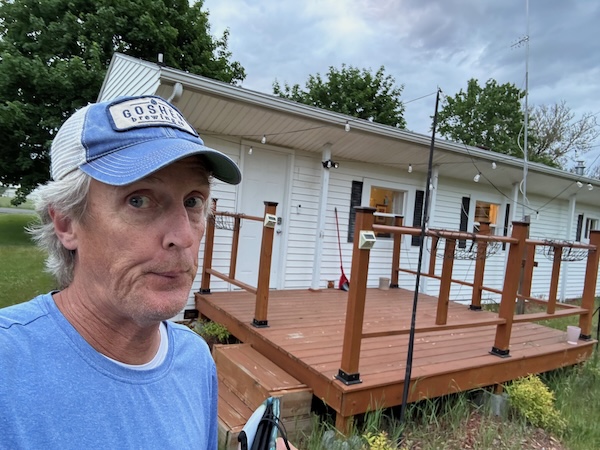
We crossed the state line on a soft day in May. Not quite cold, but definitely not desert. The traffic started somewhere outside Indiana, and by the time we pulled into the driveway, everything was bright and loud. Too green, I kept thinking. Too close. The trees were all shouting in chlorophyll.
Cletus had mowed the yard for us again—didn’t know when we were coming back but did it anyway. That’s the kind of neighbor he is. Quiet. Present. Not fuzzy, not sitcom kind—just steady. Like the ones back in Picture Rocks. You don’t ask for help, but it’s there anyway.
We unpacked. Neko the cat immediately found his old spot near the south-facing window and started sleeping more on our laps. I think he likes this house. Maybe we all do—eventually. But that first week, the house smelled like closed windows, and the carpet was too soft. Everything inside was humid. Even silence here hums with cicadas and the low thrum of RV transport and Amish buggy traffic.
The transition was harder than expected. I kept thinking I should be able to slip right back into Midwest rhythm. I’ve done this before. But this time, I felt clipped. Trimmed back—like that too-short haircut I got the week we returned. The one that undid all the Arizona wildness Lori said she liked. There’s a metaphor there I haven’t quite unpacked.
People asked how I was doing. I said “fine.” But the truth is, I wanted to complain. About the weather. About the noise. About how fast it all felt.
And I couldn’t. Not really. I’d already written about that.
A few days after we got back, I saw one of the local school buses making its slow turn onto our road—the same yellow curve, the same hiss of brakes. It made me think of a book we used to read to Evan and Colin when they were small: School Bus by Donald Crews. It’s spare and rhythmic, like so many of his books. Not much happens, but everything moves—buses go this way and that, full and empty, crossing the town. At the end of the day, they come back. Home again. Home again.
I remember how we loved the simplicity of that cadence—not just the rhythm of the students, but the rhythm of those who do the transporting. It’s all motion with purpose. And when I saw that bus again, years later miles from where we first read the book aloud, I felt something click. That line had stayed with me.
The rhythm of going out, and coming back.
The rhythm of return.
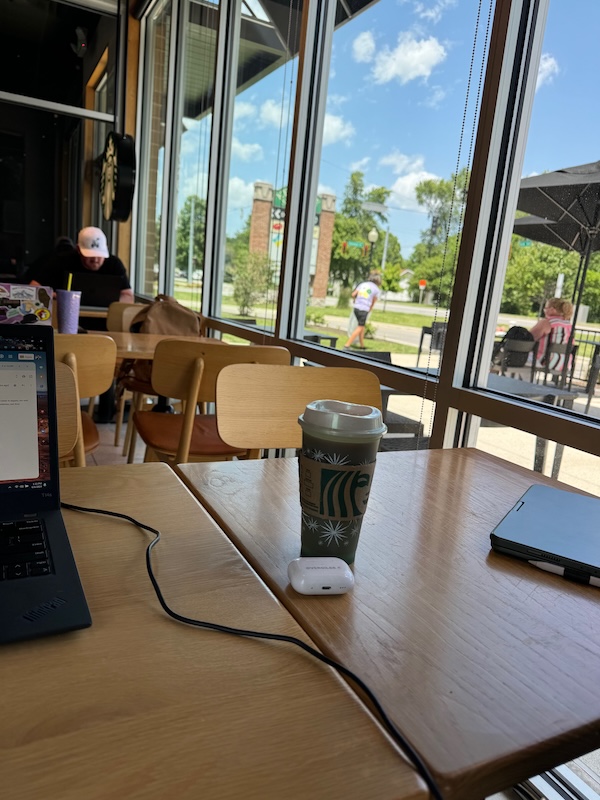
A few days later, I set up shop at the Starbucks near the bypass. My usual spot was open—small table, partial view of the parking lot, enough light to squint at the screen without full glare. I was mid-email when the Wi-Fi hiccupped, just long enough for the man behind me to mutter, “Oh come on,” like the universe owed him speed.
I almost laughed—until I realized I’d refreshed my inbox six times in the past hour. That desert patience I’d earned? Already leaking.
My body has been talking to me, too.
The sudden swing from dry to damp triggers my breathing. Asthma again—like third grade, running in from recess unable to catch a breath. It’s not always the allergens. Sometimes it’s just the shift. Or the emotions. Sometimes I feel it in my stomach first, like something turning over before I even know what the feeling is. IBS makes a great storyteller: exaggerated, blunt, unignorable.
I’ve learned not to fight it. To take a breath. Count to ten. Listen to what my body is trying to say before I decide what I think.
Sometimes the weather inside the house isn’t the real problem. It’s the one I bring in.
So here I am again. Back in Indiana. Writing. Watching the yard grow a little wilder each day. Letting the neighborhood reintroduce itself. Trying not to rush the rhythm.
The green still startles me. The rain still irritates me. Where’s my blue, warm skies? But I’m learning to let it speak before I silence it with judgment.
And maybe that’s all return really is: not a reset, but a reckoning. A walk through a familiar circle, slower this time.
We’ve done this before, of course—the great return. Packing up the slow life and dropping back into noise. But this time feels different. Maybe because the desert burned a slower rhythm into my bones. Or maybe because I’m finally learning that return is its own practice.
A kind of engagement.
A kind of writing.
A kind of route you learn by heart.
Home is a mirror. It shows what you’ve learned—and what you’ve left behind.
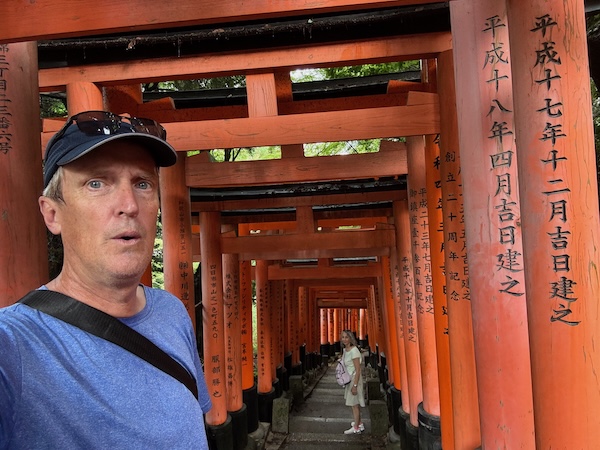
Not every threshold is as obviously sacred as the Torii gates in Kyoto. Some are just familiar doorframes. A driveway. A morning routine. A yellow bus rounding the corner. And yet, there’s something sacred in that rhythm too.
Because here’s what I know now: you can’t really “go back.” You can only keep returning, each time a little more awake.
To keep noticing.
To stay present.
To make the ride home count.